What to know first
- Calcium needs vary by age and sex; food sources can supply much of the target.
- Vitamin D supports calcium absorption and bone mineralization.
- Supplement decisions should consider total intake, kidney stones, medicines, and individual risk.
Add up the basics
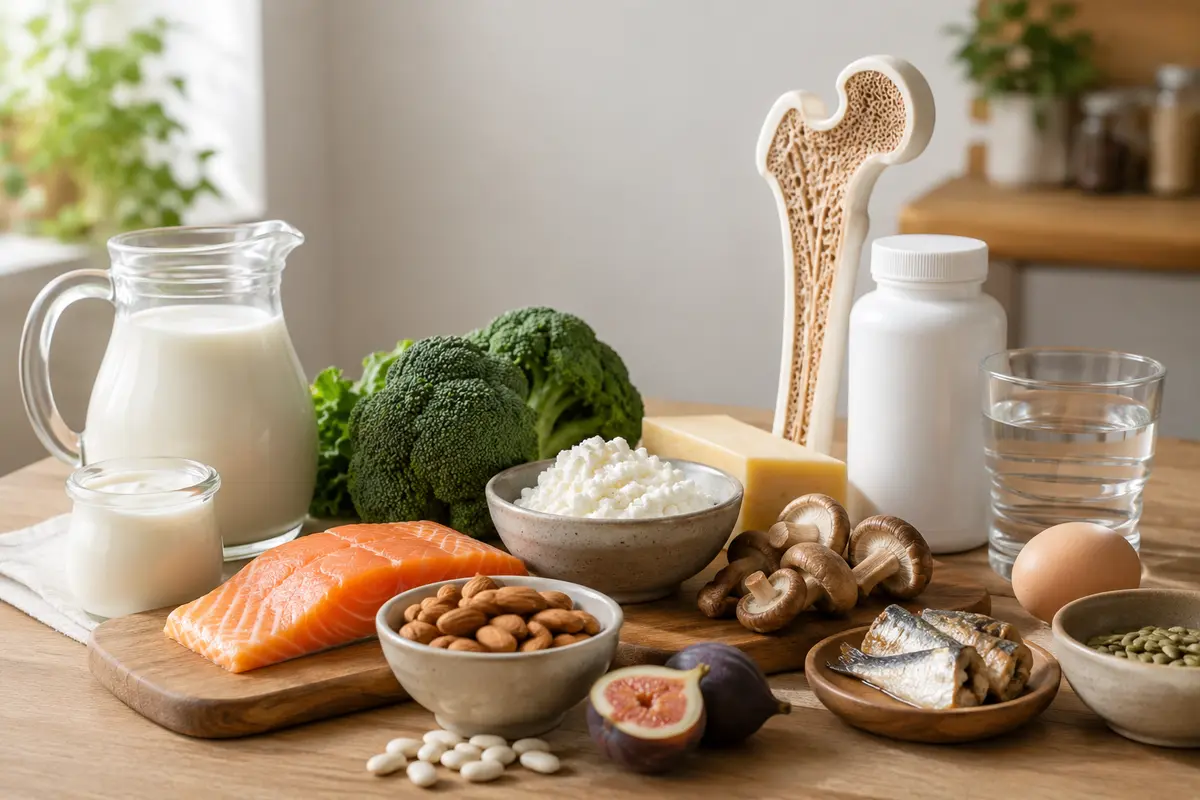
Calcium-rich foods include dairy products, fortified alternatives, some leafy greens, and fish eaten with soft bones. Vitamin D occurs naturally in relatively few foods and is added to many milks and other fortified products.
Review labels and estimate dietary intake before adding a large supplement. More than the recommended amount does not automatically create stronger bones.
Think beyond nutrients
Weight-bearing and muscle-strengthening activity, fall prevention, not smoking, and limiting alcohol all support bone health. Menopause, low body weight, certain medicines, and family history can raise osteoporosis risk.
Calcium and vitamin D supplementation studies do not show the same fracture benefit in every population. Ask whether you need testing, a bone-density scan, or targeted supplementation rather than using a universal dose.
Sources and further reading
This article is independently written from the linked public guidance. Open each source to review the original wording, context, and latest update.