What to know first
- Define the exact problem white noise machines is meant to address before choosing a product or routine.
- Separate a manufacturer’s claim from evidence about the ingredient, device, or finished product.
- Use warning signs and personal health context to decide when professional guidance matters.
Start with the evidence, not the headline
Healthy sleep depends on duration, quality, timing, and daytime function. Stress and sleep can reinforce each other, while caffeine, alcohol, medicines, pain, mood, shift work, and sleep disorders can change the pattern. For white noise machines, the most useful question is not whether a product sounds scientific; it is whether the intended use, evidence, and likely outcome match the reader’s actual need.
Evidence can range from authoritative public-health guidance and clinical guidelines to small ingredient studies and customer stories. These sources do not carry equal weight. Product-specific research is more informative than assuming every item with a familiar ingredient or feature will perform the same way.
A practical comparison checklist
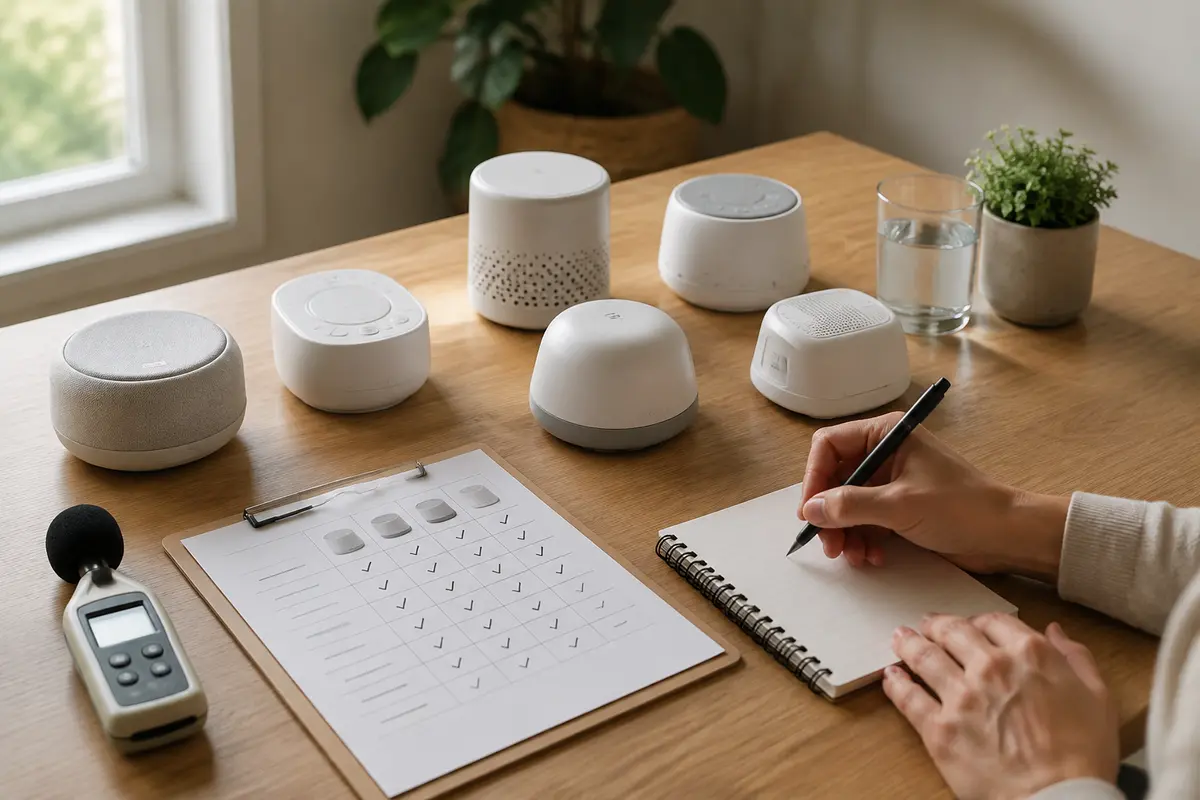
Track bedtime, wake time, awakenings, naps, caffeine, alcohol, and daytime sleepiness before buying a solution. Compare sleep products by intended use, evidence, safety, comfort, and whether they support a repeatable routine rather than adding complexity. For this topic, write down the must-have outcome, the features that support it, and the tradeoffs you can accept before comparing options.
Read the complete label or instructions, not only the front panel. Confirm who the product is for, how it is used, what is included, the full cost over time, warranty or return rules, and how to contact the seller. Be cautious when a page relies on urgency, before-and-after stories, or guaranteed outcomes instead of verifiable details.
Safety, follow-up, and when to stop
Loud snoring with gasping, dangerous daytime sleepiness, severe mood symptoms, chest pain, or persistent insomnia deserves professional evaluation. Sedating products can interact with medicines and alcohol. A sensible trial has a clear starting point, a realistic outcome to monitor, and a review date. If the product does not help, causes a reaction, or makes daily function worse, stop and reassess rather than escalating use on your own.
Bring product labels, device information, and a current medication list to a qualified clinician or pharmacist when interactions or underlying conditions are possible. This guide supports better questions; it does not diagnose a condition or replace individualized care.
Sources and further reading
This article is independently written from the linked public guidance. Open each source to review the original wording, context, and latest update.